The Cafe That Felt Like Home (Brand IP Story Introduction)
Brand IP is not built through ads or big campaigns. It is built through small, repeated experiences that people remember over time. I noticed something strange recently, there’s a small cafe in my neighborhood that never advertised much. I went there by accident, it was raining.. The barista smiled, the music was soft, and the smell of coffee felt like an old friend.
I didn’t go because of a marketing campaign.
I went because the place felt like a character I already knew.
By the third visit, that café had become “my place.” I knew which corner table I would sit at, how the barista would greet me, and even the rhythm of the background music. It wasn’t just a place to drink coffee. It became a pattern of comfort—a pattern that quietly built trust over time.
That cafe, had already built a place in my mind—a strong Brand IP.
What is Brand IP & Why It Matters (Brand IP Definition + Psychology)
Brand IP is not just a logo, a slogan, or a website design. It is the pattern of feelings, expectations, and memories that live in people’s minds when they think of your name.
Think of it like this:
A person has a personality and brand has a personality + promise.
When that personality and promise stay consistent, your brand becomes a mental shortcut. People don’t need to analyze every choice. They simply remember:
“This is the brand that feels safe,” or “This is the person who actually delivers.”
Psychologists call this repetition + fluency. The brain loves familiar things. When we see the same name, tone, color, or style again and again, it requires less mental effort to process. That’s how trust builds quietly.
Brand IP is not about how you say you are.
It’s about how people actually experience you—over and over again.
Brand IP Compounding Effect: Psychology Behind It
The Hidden Psychology Behind the Compounding Effect
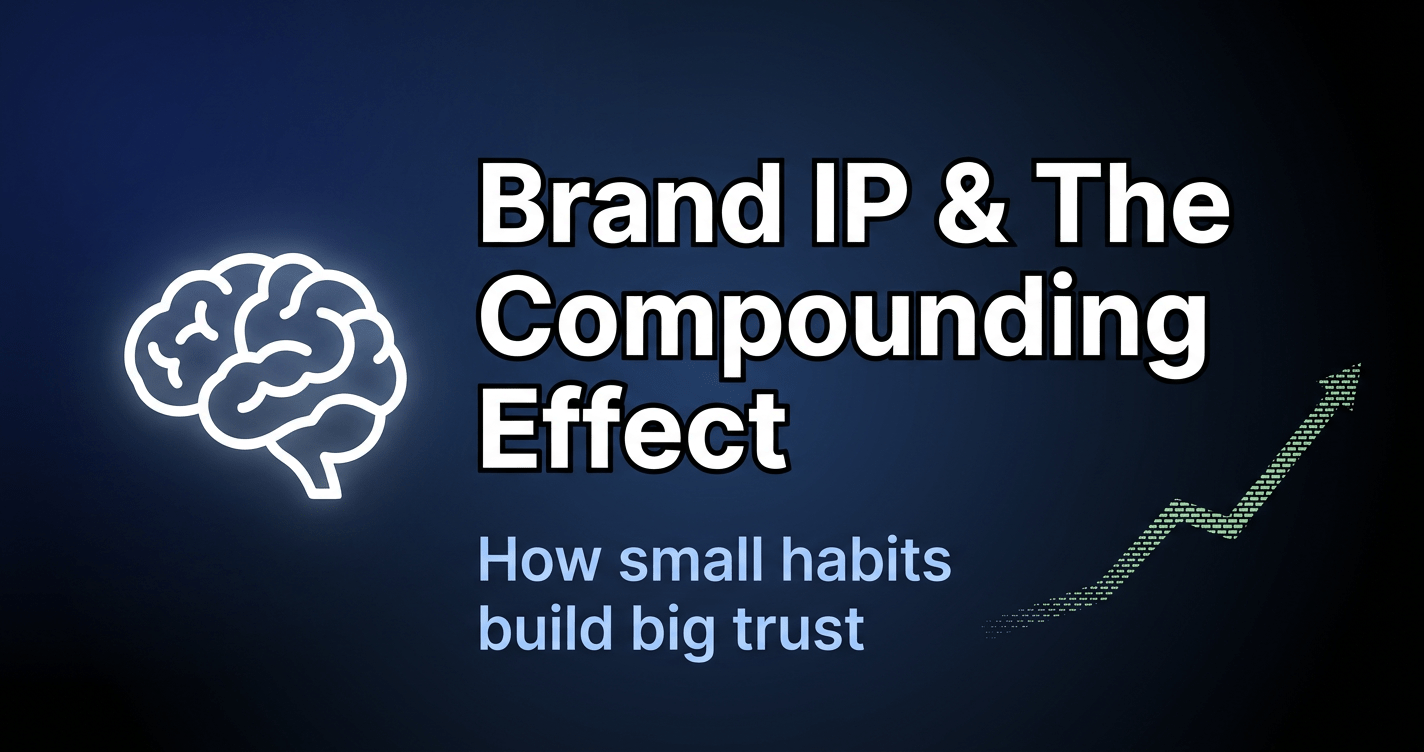
The compounding effect in Brand IP is similar to compound interest in money. You start with small, repeated actions, and over time, they grow into something much bigger than the sum of the parts. This is how Brand IP builds trust over time.
Repetition Builds Comfort
or in a conversation—you’re either reinforcing or breaking a pattern.
When that pattern stays the same:
The same tone, values and the same quality
People feel relaxed. They think,“I know this brand. I can trust this.”
The brain doesn’t like surprises that feel risky. It likes predictability. Predictability is the secret language of trust.
Pattern Becomes Identity
Humans don’t just buy brands. They identify with them.
If you see yourself as serious, thoughtful and structured, you’re more likely to choose brands that communicate clearly, directly, and with depth.
Over time, people start to say:
“I’m the kind of person who uses this brand.”
That’s not just about the product. It’s about identity matching. When your brand’s personality aligns with someone’s self image, the connection becomes emotional. And emotional bonds are hard to break.
Trust Is Built in Tiny Moments
Trust is not built in one big event. It’s built in small, repeated moments.
When you:
Keep your word
Reply honestly
Show up with the same energy
Deliver quietly, without drama
Each of these actions adds a tiny deposit to someone’s trust account.
When enough deposits accumulate, your brand starts to feel like a friend, not a salesperson. And friends are not easily replaced.
Emotional Triggers That Make Brand IP Stick
Safety and Predictability
In a world full of noise, change, and uncertainty, people fight for safe corners—places and brands that feel stable.
If your brand is consistent in tone, quality, and behavior, people feel less anxious.
They think:“With this brand, I don’t need to over think. I know it will be good.”
Relief from Overwhelm (Choice Overload Psychology)
Modern life is a constant flood of choices, information, and options. Psychologists call this choice overload and confusing.
When people face too many options, they feel mentally exhausted.
A strong Brand IP gives them a shortcut:
“I don’t need to search anymore. I know this brand”
Belonging and Identity
We all want to belong—to a group, a community, or a tribe.
Brands that clearly communicate:
“We are for serious learners, honest creators and for the people who care about real growth,”
“And strong Brand IP invites people to say, ‘This is where I belong.”
Small Wins and Progress
Brands that help people feel “I’m moving forward” create strong emotional hooks.
When someone uses a product, course, or service and feels like they’ve made progress—even a small step—they connect that feeling with your name.
Over the time, that bond becomes automatic:
“Whenever I want to grow, I come here.”
That’s the emotional engine behind Brand IP compounding.
Real-Life Example of Brand IP Compounding
Rahul runs a small YouTube channel focused on personal growth and practical psychology. He doesn’t have a huge team, big budget, or viral moments. His first 100 videos were slow, often ignored.
But Rahul had one rule:
“Every video must feel like a calm, honest conversation with a friend.”
He did three things very simply:
Same opening line: “Let’s talk about this with complete honesty.”
Same structure: problem → inside story → simple explanation → practical step.
Same tone: no hype, no forcing, no click bait.
Over time, something quiet but powerful happened.
People started to say:
“I don’t need to read the title; I know what this will feel like.”
“This channel is for people who actually care about growth, not just motivation.”
His Brand IP became:
“Rahul’s channel = honest, structured, no fluff psychology for normal people.”
Because that pattern stayed consistent, his trust grew.
People came back.
Recommended him.
Felt safe sharing his videos with friends.
After three years, his audience size was modest, but his loyalty and engagement were unusually high. People didn’t just watch; they felt like they were part of a small, honest community.
That’s compounding in action—not in big explosions of growth, but in slow, steady growth of trust, recognition, and emotional connection.
Lessons and Self Awareness from Brand IP Building
Lessons and Self Awareness
Building Brand IP is, at its core, a self awareness practice. It forces you to ask:
Who am I really?
What do I stand for?
How do I want people to feel in my presence?
Here are a few simple but powerful lessons:
Your Behavior Is Your Brand
Your brand is not your logo. It’s how you behave with your customers, your team, and your audience. Small moments—how you respond to a complaint, how you handle delays, how you communicate—decide your Brand IP.
Slow Is Often Stronger
In a world addicted to quick growth and viral moments, consistency feels boring. But boring, repeated actions build deep trust.
Identity Alignment Matters
Every product, message, or campaign should fit your core identity. Ask yourself:
“Does this decision fit who my brand truly is?”
Emotional Responsibility
Once people emotionally connect with your brand, you enter an unspoken agreement with them. They are giving you a bit of their trust, attention, and identity.
FAQ – Brand IP Creation & Compounding Effect
Is Brand IP only for big companies?
No. Brand IP can be built by individuals, small creators, coaches, freelancers, and local businesses.
How long does the compounding effect take?
There’s no fixed time. It’s usually months to years, not days. But the first step is clarity: you must know what pattern you’re building.
Can I change my Brand IP later?
You can, but it’s emotionally costly. It’s like changing your personality in front of your friends. People may feel confused or even betrayed. If you must change, do it slowly and honestly, with clear communication.
Is Building Brand IP manipulative?
Not if it’s honest. Manipulation hides truth and exploits emotions. True Brand IP is about matching your inner values with your outer pattern.
How can I start building Brand IP today?
Start small:
Write down one clear sentence about your promise.
Decide one tone and style you’ll stick to.
Repeat that in every interaction—no matter how small.
“Brand IP is built not by what you say once, but by what people remember after seeing you again and again.”
Make people feel something otherwise they’ll forget everything.
Follow The BuzzKart Media